
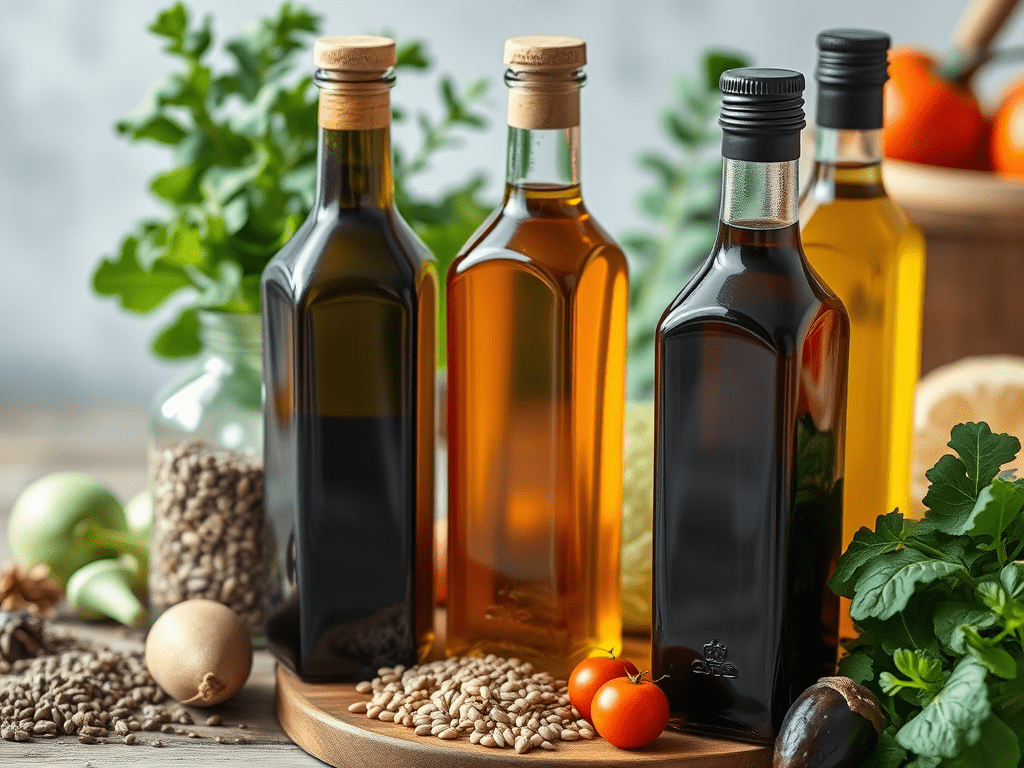
The Big Picture: The Real Story Behind Seed Oils and Inflammation
Few nutrition debates have become as heated as the one over seed oils. On social media, influencers and public figures like RFK Jr. claim that canola, soybean, sunflower, and corn oils are silent toxins fueling modern inflammation and chronic disease. To many, these oils have become the new dietary villain — replacing sugar and gluten as the latest public enemy.
But the actual science tells a far more complicated story. Much of what’s said about seed oils and inflammation stems from misunderstood research, misapplied data, and a selective reading of nutritional studies. When you dig into the details, it becomes clear that the issue isn’t so much the oils themselves, but how they’re used and how certain findings have been distorted in the online echo chamber.
The Misunderstood Science
At the center of the controversy is linoleic acid, an omega-6 fatty acid found abundantly in seed oils. Critics claim that linoleic acid promotes chronic inflammation by disrupting the omega-6 to omega-3 ratio in the body. The logic seems intuitive: if omega-3s reduce inflammation, omega-6s must do the opposite.
But human biology rarely works that neatly. Clinical research shows that while omega-6 fats can be converted into pro-inflammatory compounds under specific conditions, this pathway is tightly regulated in the body. Controlled studies consistently find that higher intake of linoleic acid does not increase markers of inflammation in healthy humans. In fact, some evidence even suggests modest benefits for heart health and cholesterol regulation when seed oils replace saturated fats.
So where does the fear come from? Much of it traces back to animal and cell culture studies, where researchers observed inflammatory responses after exposing cells or lab animals to high concentrations of oxidized seed oil or linoleic acid derivatives. These studies are valuable for understanding mechanisms, but they don’t represent what happens in a typical human diet.
What the Research Actually Shows
A 2023 study in Food Science and Biotechnology examined how edible oils degrade under repeated heating at 180°C (356°F), simulating deep-frying conditions common in restaurants. Researchers found that when seed oils are reheated multiple times, they can form aldehydes, oxidized triglycerides, and polar compounds — all linked to oxidative stress and potential inflammation in lab models.
However, this degradation occurs primarily when oils are reused over long periods — something far more common in industrial fryers than in home kitchens. When oils are used fresh or only briefly heated, the formation of harmful byproducts is minimal.
In other words, the real concern lies with reused commercial frying oil, not the bottle of canola or sunflower oil in your pantry.
Where Things Go Wrong
The gap between research and reality is where misinformation thrives. Influencers often present findings from extreme lab conditions as if they apply directly to normal cooking. They’ll show data from a mouse fed oxidized oil for weeks and claim it proves that your salad dressing is inflammatory.
Key context often missing from these claims includes:
- Model mismatch: Animal and cell studies don’t directly translate to human dietary effects.
- Unrealistic exposure: The doses and conditions used in experiments far exceed normal consumption.
- Varied oil stability: High-oleic versions of seed oils resist oxidation much better than older formulations.
- Regulated physiology: The human body has complex systems to balance and metabolize fatty acids safely.
The problem isn’t that these studies are “wrong” — it’s that they’re being misrepresented.
The Real Takeaway
When seed oils are fresh, not overheated, and used in moderation, there’s little evidence that they cause inflammation or chronic disease. The true risk emerges in repeated, high-temperature frying, where oils break down into compounds that could plausibly contribute to oxidative stress and tissue damage.
As Dr. Richard Bazinet of the University of Toronto explains, “There’s no question that reused oils under extreme heat can produce harmful compounds — but that’s a far cry from using canola oil to roast vegetables once a week.”
So, are seed oils “toxic”? Not in any reasonable sense. Are they immune from scrutiny? Also no. The takeaway is not to banish them from your diet, but to understand the conditions that actually make them problematic.
For most people, the smarter move isn’t eliminating seed oils — it’s cutting down on fast food and deep-fried snacks where oil reuse is common.
Final Word
The debate over seed oils and inflammation reveals something larger about how nutrition science gets lost in translation. Complex, conditional data gets distilled into black-and-white claims — and before long, nuance is replaced by ideology.
The truth is both less dramatic and more useful: seed oils can break down into harmful compounds under certain conditions, but in ordinary cooking they remain a safe and versatile source of unsaturated fats. The problem isn’t the oil — it’s how, and how often, we use it.
The real enemy isn’t canola or sunflower oil. It’s oversimplified science.


